Where the Stuff Goes

I am easily overwhelmed by huge libraries, but I love to peruse them. Like Machiavelli and Alberto Manguel, I like to sit amongst books. I even tried sleeping with them when I was younger, thinking it would help me absorb the information more quickly. In these readings I was interested in how the digital world intersects with the physical world both logistically and experientially.

In Warburg’s library, the organization of the books was the most important element. This “catalogue of problems” gave a unique insight into the actual information that people were seeking. The intimate journey to the information was just as important as the information itself. The Prelingers carried on this tradition of a journey when they discussed browsing and all the various associations that happen when one is in the physical space of books. Putting their collection online doesn’t quite offer the same experience, although I liked some of the ideas they had to make the online browsing experience more like the in-person experience.

Moving from there to getting a better sense of how some of America’s biggest libraries store and lend out their materials made me feel as though we went from someone’s living room to a warehouse. Gone is that intimacy, but the information is more readily available. I wonder how much the role of efficiency of preservation and the ease of online collections moves us from an intimate experience of sitting amongst our books. I wonder what “free photography” does to the collection of photography. Do things become more accessible and less sacred? Or are they more readily available so we can appreciate them more?

Libraries in the age of search engines and information retrieval

Aby Warburg’s “law of the good neighbor” really stresses on the relations between books, so much so that arranging books in their appropriate spaces no longer becomes a mere simple case of categorizing their content/subject-matter, but the lines of potential connections and associations between a constellation of books. I feel like it is this potential of charting (perhaps hitherto unnoticed) connections between books/things that similarly drives the Prelinger Library. Particularly, both Rick and Megan Prelinger spoke of the need to sustain a browsing experience in the library that should not be reduced to a simple query-based search and information retrieval.

The latter seems instead to be increasingly the mode of the library experience: query-based search and information retrieval. Watching the Cold Storage video, I can’t help but feel that while the need for consolidated offsite storage facilities does have its logistical conveniences (and may afford librarians more time to do their cultural programming), if libraries continue adding more and more materials to their collection, they are really going to end up having to depend on these offsite storage facilities. When that happens, I worry if this may also end up sealing the fate of the library experience as purely a process of information retrieval. If that should happen, would the library then be reduced essentially to a platform and search engine?

Off topic, but there’s also a great podcast from Radiolab on the logistics of Amazon and other Internet retail systems. I highly recommend it!

Library as Memory

A couple of things struck me from the readings this week, mostly from Alberto Manguel’s description of Aby Warburg’s library in The Library at Night. I had never heard of Warburg or his library before and I found the thought of his constant rearranging of books through the processing of ideas very fascinating. His memory seems to me to be prolific in its abilities: where we now use metadata and tagging to search for interconnected materials, Warburg’s system of notes and sheer brainpower was able to connect hundreds of items.

I did find the description of the Warburg Institute library to be somewhat ironic: while alive, Warburg constantly rearranged the contents of his library, but it now stands frozen in time.

This theme of memory as library and the immortalization of a single moment or thought really got me thinking about the present social and political climate. Manguel’s description of the “perseverance of memory” as “the mental phenomenon where something is perceived as true even after it has been proven false” (pp 197) has consistently appeared in Media although I wasn’t aware of its name.

I had stumbled upon something similar in a blog called theoatmeal.com in which the author, Matthew Inman, describes the Backfire Effect: a phenomenon that occurs when you give someone facts which may contradict a particular belief they have, causing them to hold onto it even more so than before you attempted to correct them.  

This idea of the fluidity of truth is also seen in Dali’s famous melting clocks in his 1931 “Persistence of Memory,” completed two years after Warburg’s passing, which art historian Dawn Adès described as “an unconscious symbol of the relativity of space and time, a Surrealist meditation on the collapse of our notions of a fixed cosmic order” (Dali, 1982).

It seems that even after nearly a century, we are still struggling with the same anxieties as Dali and Warburg.


Xu Bing’s Dragonfly Eyes (2017); US Premiere at NYFF55

A feature film made essentially with (found) surveillance footage in China collected and uploaded onto the cloud, Xu Bing’s Dragonfly Eyes (2017) will have its US premiere at the New York Film Festival in October. Working through 10,000 hours of surveillance footages publicly accessible online, the artist and his assistants edited the excerpts into a 81-minute feature. A trailer of the film is available on YouTube.

I had the amazing chance to preview excerpts from the film during Xu Bing’s visit to Parsons as part of the Parsons Fine Arts Visiting Artists Series. Xu talked about the sheer ease of publicly accessing an entire database/archive of surveillance footages in China, how the proliferation of surveillance cameras has essentially turned the world into a studio set, and (rather than simply regurgitating the typical image of an Orwellian police state in China) what he thought about the emergence of a “post-surveillance” China where people are themselves reclaiming and using the surveillance tools and infrastructures to produce their own footages.


DATES
Sunday, October 8, 2017, 9.30PM
Monday, October 9, 2017, 8.45PM

LOCATION
55th New York Film Festival 2017
The Film Society of Lincoln Center
70 Lincoln Center Plaza
New York, NY 10023

Some Thoughts on The Morgan

I hope I’m not being too cynical, but I really did feel rather depressed and a little suffocated by the opulence of The Morgan’s Library.

While I am deeply appreciative of the Morgan family opening up its collection to the public, I can’t shake off the knowledge that the library and Pierpont Morgan’s collection seems to have been primarily initiated and motivated by a need to demonstrate one’s cultural pedigree and taste. It stares back at me in the never-ending wallpaper of paintings, tapestry, and books. If nature abhors a vacuum, Morgan’s walls seem to abhor any gap. And the wallpaper of paintings, tapestry, and books end up looking like they are just as foundational to the building as the bricks themselves.

If we think further about its history as a private collection, I can’t help but think about it along the terms of access in two layers: First, Morgan sought to purchase what was deemed as the very best examples of high culture in Europe and to consolidate it in his private home, in order to domesticate/internalize it in a way that both displays Morgan’s cultural pedigree but also exhibits what his spending power allows him to access/consume; the second being that one would have to be of some social standing in order to be even invited into Morgan’s private collection. Such that by the time the Morgan was opened to the public in 1928, it seems to have participated in what Tony Bennett terms as “exhibitionary complex,” with the general public performing essentially as witnesses to a display of power and cultural capital.

Though opened to the public, the original architecture and interiors of the library nonetheless reveals a certain closeting of power. And I left wondering if the new 2006 glass extension was indeed an architectural attempt to render the institution and its collection a little more “transparent” and “open.” But of course, I don’t wish to discount the work done by The Morgan through its cultural programming; and I am very glad to know that its collection remains open to the public’s viewing and curiosity, even if its library functions effectively as a closed stack. All in all, we’re better for its being made into a public space. And The Morgan, if anything else, is a great reminder that not all libraries (and archives?) necessarily function or are built on the foundational belief of democratizing knowledge.

Archive in Brazil’s dictatorship history: an example of the commandment aspect

After reading about the archaeologies of the archives and visiting the New York City Municipal Archives, I realized how important those institutions and places are, but also how the commandment aspect, cited by Derrida’s “Archive Fever”, plays a crucial role.

It made me think about the history and archive infrastructure in my own country, Brazil. As Manoff says “… the archives anchors exploration of national identity and provide the evidence for establishing the meaning of the past.” (“Theories of the Archive from Across the Disciplines”, p.16) During the years of 1964 and 1985 a dictatorship took place in Brazil. Nowadays, after 27 years of democracy, some social, political and historical aspects are still not clear and well discussed.

This situation is definitely related to the way this moment of history was archived, thus remembered: many files from the dictatorship are still missing nowadays, as government and military institutions didn’t give all of them to the Public Archives, even after a “Truth Commission” (Comissão da Verdade) was established in 2011 to further investigate all human violations that happened during those years. Also, many files related to the Brazilian dictatorship are “missing” (were probably destroyed), leaving “gaps” that helped executioners to remain free after their judgments, because there was not enough proof.

As Derrida points out, the methods in which information is transmitted and communicated determines what becomes knowledge and what is forgotten. Controlling of archival is a political power. Hence, it controls our memory. Is it possible to see this in Brazil, where there’s still people that don’t really acknowledge the existence of a dictatorship that killed thousands of people in the past.

In addition to the archival processing in Brazil, some street names still keep executioner names, whereas many people who were killed never had their bodies found and remain “disappeared”. As a reaction to that, some NGOs and social organizations are trying to put new names in new streets of the city with those who were killed.

If the archive is a registration of history from a particular perspective, it is also important to pay attention to other types or “archiving processes” such as the example above. In Brazil, I’m more and more convinced that those “non-official” forms of archives are essential to establish the meaning of the past, hoping that they will enhance the notion of archive as a choice’s procedure and enable a deeper discussion of those choices.


Go to the library

Post for September 19: Library Lineages

I used to think that as libraries’ role have shrunk to the similar level of print media’s role, the book rooms had better focus on the minorities, those who deliberately keep distance from the mundane, like the Komura Memorial Library serving as a haven for the runaway protagonist in Haruki Murakami’s novel Kafka on the Shore. After being reminded of Marx’s argument, in the modern societies, people will have to give money in exchange for all the stuff they cherish, my conviction was even enhanced. For the disfranchised, libraries indeed provided a lot of free services in various places all over the world; But for rest of citizens, libraries also could be offering spaces for quality reading/writing groups or workshops. I personally would like to have those features in my hometown’s libraries, since book communities organized by local publishers here in New York are scarce there.
People aren’t consuming less books. Rather, we read and listen to content via increasingly varying media. The ubiquitous podcasts is one of the examples. If we can work with our sophisticated librarians to establish the required and desired facilities at the brick and mortar halls, communities would actually appear. Sometimes it feels a lot better to interact with likeminded folks and practice my enthusiasm at once than gazing at the screens and staying with the devices alone.

Dewey even use the library?

(A shorter one this week.)

Melvil Dewey was a renaissance man – OF COURSE.

The library is much more, and can be much more, than whatever associations we have thrown together from life experience. The history of the Morgan library has made me consider the future publification of other private collections – will future generations one day be able to wander through Kanye west’s library of Jetsons memorabilia (he is a superfan)? Will it be the focus of a middle school field trip, boring the students to death but exciting their parents? Will the inclusion of something pop culture related in a wealthy celebrity’s “permanent collection” be momentum enough to elevate its status from “pop art” to “fine art” or “artifact”? Does a library possess such transformative power?

It seems to me that the most inclusive way to define library spaces is just to refer to them as manufacturing, refinement, and distribution facilities for the additive commodity that is knowledge. When it comes to new technologies “changing” the role of the library, I consider that what happens inside the library as not necessarily a part of its core “mission statement” (if you will – and through exploring the history of the library we are able to deduce, in a sieve-like way, what the library stands for among its many parallel purposes and values).

Our historical readings trace how knowledge and the medium of its recording have always provided a multifunctional value to the person or people in charge. Saladin selling a library to pay for the crusades might have been a mistake in the eyes of everyone curious about the content of those documents, but that line of thinking is dangerously arrogant; the library’s evolution has taught humanity about the value of knowledge through reflections on the regret of its misappropriation, incorrect appraisal, destruction. The library has come to represent shared knowledge, the earthly scrapbook of our species, and efforts to keep libraries (and the manner in which these efforts are rolled out) are a way we measure our self-worth… and scrap books can be dark!

As role of the library changes, the professor is certainly correct, I believe, in warning that making new things does not constitute an enlargement of the global knowledge pool.

Burning human answers.. and questions.

Burning Heritage


Reading the piece by Matthew Battles, Library: An Unique History, Burning Alexandria; reminded me of a time I visited my local library to do a little research and left just as confused as when I arrived. It wasn’t that I didn’t know what to search for, but what I wanted to search for, did not exist–not even the librarian could guide my steps.

Where old books were stored and how librarians arranged content in the eighteenth and nineteenth centuries has been eye opening. I can even understand the pressures of political and societal upheavals, experienced by archivist. Their duties to store, shelve, categorize, preserve and organize information— but the torment of deciding what data and material artifacts to cherish, immoralize and authorize, and which to just toss away, never be seen again-ever, is something totally separate.

Are we becoming ‘caregivers’ or the ‘custodians’ of libraries, as Battles states nicely with this analogy? Can we begin to reshape methods of inclusion and rigorously restore truth and history without bias?

The story of Enoch Soames in Max Beerbohm’s Seven Men (pg. 117) reminds me of marginalized cultures whose origins and great systems of knowledge may never be recounted or acknowledged, only confirmed as “conquered” or “overthrown” with no further detail. The fear of not seeing self.  I can see what is being excluded in some of this work. The whole truth can never be retold or preserved- because it does not exist. It has been burned, destroyed and being replaced by new empires, with new systems and new laws that govern the control of knowledge and information– and ultimately whole societies.

Answers?

Questions?


Oct 20: Ideathon for Adult Learning in Public Libraries

Join us to explore adult learning in public libraries! [more info here]

Over the next year, we’ll be hosting three ideathons in partnership with public libraries located around the country. These half-day events are designed to surface and document ideas, input, and feedback from library administrators and frontline staff – reference, adult education, and technology librarians – as we build and iterate on the Reading List for Life.

Ideathons will ensure that both the technical and social architecture of the Reading List will be guided by the public library community and designed with different library needs and workflows in mind.

Ideathons are hosted by the Reading List for Life, The Open Syllabus Project, Columbia University, the Metropolitan New York Library Council, and Project Information Literacy, and funded by the Sloan Foundation. If you’re interested in joining an event, or would like to suggest a library venue, send us an email!

Date: Friday, October 20, 2017
Time: 9 AM – 1 PM
Location: Metropolitan New York Library Council
599 Eleventh Avenue
New York, NY

Tentative schedule:

9:00 – 9:30 – Coffee and light refreshments
9:30 – 10:00 – Welcome and introductions
10:00 – 10:45 – Project background and discussion
10:45 – 11:00 – Break
11:00 – 12:00 – Small group breakout sessions
12:00 – 1:00 – Lunch, sharing ideas, and discussion

Artist and the Archive: Deconstructing Racial Imagination

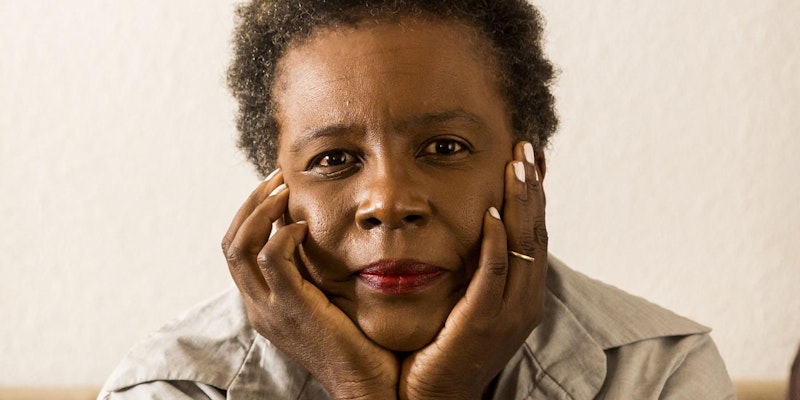
Founded by poet and McArthur Fellow Claudia Rankine, The Racial Imaginary Institute (TRII) is an interdisciplinary cultural laboratory of writers, activists, scholars, and artists, dedicated to the work of engaging the concept of the racial imagination, specifically critiquing the costs and means by which whiteness and institutional racism have shaped cultural production, politics, and memory. This program will feature a discussion with Rankine and scholars, artists, and writers on art, activism and the archives. They will also explore how TRII’s new online archive will be used by artists and writers seeking to examine important conversations on race in the U.S. and across the globe through artistic practice.

DATE

Tue, September 26, 2017

6:30 PM – 8:30 PM EDT

LOCATION

Schomburg Center for Research in Black Culture

515 Malcolm X Boulevard

New York, NY 10037

RSVP @ https://www.eventbrite.com/e/artist-and-the-archive-deconstructing-racial-imagination-tickets-36842700509

more like Derri – duh! (holds up hand expecting high fives, gets none)

Manoff’s piece provides a great context for an olympic dive into the informative yet recondite piece by Derrida. For Darth Derrida, archiving is way more sinister than you’d think; linked to the two conflicting forces of the death drive, and the conservation drive (linked to the pleasure principle), the structure and role of the archive in society is perhaps a very telling externalization of individual inner struggle. Ironically, while Freud’s work can at times feel reductively alienating, it seems that Derrida’s inclusion of Freud into the discussion of the archive is an attempt to make it personal, universal, primal, consequential. This is not the first time I’ve come across theory in a collegiate/grad school setting that makes me wish I had a doctoral level handle on psychoanalysis. We should have someone with a psychoanalysis degree in every class, hidden in plain sight, ready to spring into action like an academic air marshall.

This week’s readings sent me into a cognitive tailspin (as most readings do). To understand that extant archives are not necessarily of value to people that will eventually comb through them, proportionately to the degree that parts of life which would be invaluable as data never become mummified as such, injects a degree of randomness to the overall use value of the archive. The Hairpin article helps illuminate the extent to which archives are dedicated to context, which values the valueless because of its comparative contribution to something which does or will have value. Much can be understood about archival science (and black magic) by following the reasoning of an archivist as they attempt to answer questions many of us would likely ask them ourselves.

I became quite interested in the idea of the act of archiving as the elimination of personal biases, almost as though the archive itself is a globally scaled hindsight one can retrofit into the catch phrase “hindsight is 20/20”. Perhaps archiving is not preservation, but filtration, the same way short term memories are cherry picked for long term memories in the human brain. Perhaps archivists impose the same filtration style, on a large scale, upon cultural memories by datafying and preserving content and context (according to some specific criteria) to enable future unbiased minds to retroactively assign meaning or use meaning in a way that serves whatever survived early generations of bias-infancy regarding that information.

Perhaps neurons direct each other, to and fro, like a librarian would a genealogist seeking a specific public record.

It dawned on me that, at some point, essential archives may become absorbed, as a whole or in part, by another entity that supplants them. I wonder if all the material transferred in this scenario will be permanently watermarked as having passed through the curation of the previous archive which amassed it, which had its own principles governing the collection process. This might be particularly interesting should a regime, state or region become rearranged or fall to the point of requiring total restoration by another (perhaps invading) state.

If all the physical and digital materials accessible at the NYPL in the year, let’s say, 2017, were one day featured at a recreated site, it might, from a LaCaprian perspective, be a great (if not the most objective) pathway to understanding the geopolitical reality of the aforementioned year; what constituted knowledge, archives explain, constitute reality and cultural memory. I suspect such a future archive might also resemble a bit of an amusement park. Perhaps a future way to understand capitalism would be to visit a preserved archive first assembled during its heyday, and see for yourself the degree to which the profit motive shapes the preserved knowledge, comparing it then to similar source material at an archive intact across the world. What books are tattered beyond repair? What books are immaculate, with multiple copies? Combing through records of cardholders, what did the average political science student check out? My imaginative ramble of a scenario is really inspired by uncertainty as to whether context defines data or corrupts it.

Hopefully, one could then compare data at this future archive to the “truth” by jumping in a delorean. I’ve always thought this to be an unappreciated perk of the prospect of time travel; the illumination of the impact of human and societal biases on historical event, i.e. we travel through time not to see the past, but to sample it for comparisons that allow us to retroactively understand how much of any given present we subjectively take with us into the future (an issue that I now understand governs much of the minutiae of an archivist’s work).

Processing Post | Archaeologies of the Archive

There’s a scene in Star Wars II: Attack of the Clones where Obi Wan is consulting Jocasta Nu, resident archivist of the Jedi Temple:

Jocasta Nu: Let me do a gravitational scan … There are some inconsistencies here. Maybe the planet you are looking for was destroyed.

Obi-Wan: Wouldn’t that be on record?

Jocasta Nu: It ought to be. Unless it was very recent. I hate to say it, but it looks like the system you’re searching for doesn’t exist.

Obi-Wan: That’s impossible. Perhaps the archives are incomplete.

Jocasta Nu: The archives are comprehensive and totally secure, my young Jedi. One thing you may be absolutely sure of – if an item does not appear in our records, it doesn’t exist.

***

Marlene Manoff’s article is a helpful point of entry into Jacque Derrida’s Archive Fever, especially if, like me, you haven’t read a single page of Derrida in more than five years! Manoff summarizes Derrida’s core arguments neatly into two main points: (1) the archive does not exist simply after the events of the history as this neutral repository of the past, but is rather itself a medium that determines and makes possible what is archivable in the first place as our retrievable past; the past then does not exist for Derrida a priori and independent of the archive writ large; (2) the Freudian binary opposition Derrida hinges on for his argument – that of the pleasures of the archival impulse to collect and preserve the past for the potentialities of the future, and that of the death drive which seeks to destroy archives in order to return to the quiet and stasis of forgetfulness or amnesia. (Manoff 11-12)

But what is crucial in Derrida’s text, and missing in Manoff’s summary, is Derrida’s overturning of the binary between the archival impulse to collect and the death drive of forgetting.If conventional wisdom tends to believe that archives are the “bastions in the war on entropy” (Tim Maly, “Dark Archives”), this privileging of the archive bears further scrutiny for Derrida: “There would indeed be no archive desire without the radical finitude, without the possibility of a forgetfulness which does not limit itself to repression.” (19) In other words, Derrida seems to be suggesting a parasitic co-dependence and co-implication between the archival impulse and that of forgetfulness. Derrida’s text, if anything else, serves as a reminder not to fall into a feverish over-investment of the archive at the expense of glossing over others (e.g. the possibility of forgetfulness) that are the crucial support structures (both physical or otherwise) of our archives.

In many ways, Derrida’s re-reading and reconfiguration of Freud’s terms here onto a (media?) theory of the archive is an interesting context to consider. Namely, Derrida seems to want to broaden and complicate the “archive”/canon of Freud’s literature, to wrestle Freud’s legacy away from the exclusive control of those who seek to franchise it (i.e. so-called Freudians) and to bring the startling insights of Freud into unchartered territories. Hence also Derrida’s use of presumably unorthodox and un-archived documents from Freud’s legacy (e.g. Jakob Freud’s correspondence with his son about the latter’s book and of the latter’s circumcision). To borrow Tim Maly and Donald Rumsfeld’s terms, we might say that Derrida was unearthing from the dark the “unknown knowns” of the Freud Archive.

While I agree with some of the charges against Derrida’s theory of the archive, such as the need to also consider the literature and experience of professional archivists on the ground, I do not think of Derrida’s theory and professional literature as mutually exclusive. Yes, it is true that perhaps had Derrida actually have some hands-on experience and practice as a professional archivist, he might have had very different thoughts on the archive. But that seems to also miss Derrida’s subtle point about the archive as well – which is already evident in the first page of his opening note. By beginning with the etymology of the word “archive,” Derrida is cheekily making the point that etymology is itself also archival in nature, by tracking the semantic histories and provenance of a particular word. By beginning his text which is supposedly about archives with etymology, Derrida is deliberately questioning the notion of what constitutes an archive, broadening the archive of the archive, and thereby asking us to consider the pitfalls of professionalization. Just as it may be that the professional Freudians would have a particular archive of Freud’s work and legacy in their agenda, professional literature on the archives may also be blinded by its own archive of the archive.

I hope all this makes sense, despite the repetitions. I want to end by saying I am not necessarily a fan of Derrida, nor a defender of his text too. And I do sense that Derrida’s text has much to learn from the insights of the literature written by professional archivists. (I myself look forward to the field trip and to further insights from the professional archivists!) But perhaps Derrida’s text is nonetheless a helpful reminder that the archive is not something that should be the sole property of anyone in particular, not even the professionals. If that happens, then all discourse of the archive will simply be “known unknowns” hidden behind the policed barrier of professionalization. The archive of the archive needs, as Derrida might suggest, to be publicly accessible, used and possibly even reconfigured by others. The locking down of archival discourse would thereby only destroy the archival possibilities of the archive. Personally, I would file Derrida’s text as a modest contribution to enrich the archive of the archive.

Nov 27-28: Conserving Active Matter @ Bard Grad Center

November 27-28, 2017
38 West 86th St

This symposium launches “Conserving Active Matter,” the research project at the core of the second phase of Bard Graduate Center’s “Cultures of Conservation” initiative, generously supported by The Andrew W. Mellon Foundation. Scholars will explore the meaning of active matter through the lenses of materials, history, philosophy, and indigenous ontologies.

You’ll need to check the website for more details and to register.

Yet the Mellon grant supporting this project offers some insight into what might be addressed:

“Conserving Active Matter” aims to reshape conservation thinking and training by creating new expectations for the intellectual contributions of conservators and the kinds of discussions in which their presence will be required. In a world of active matter—the way in which organic materials are intrinsically active and therefore constantly change—the conservator’s scientific training is essential as is a philosophical understanding of the long history of the issues given new form by the challenges of modern materials. “Conserving Active Matter” will focus on the consequences of taking into account the highly mutable, dynamic, and active character of objects and images, which pose challenges not only for exhibiting but also for conservation, and even, for the museum itself.

Nov 3: Filmmaker Bill Morrison @ TNS’s GIDEST

Friday, November 3, 12noon – 1:30pm
University Center, Room 411
More on GIDEST’s website

Bill Morrison‘s films are instantly recognizable for their meticulous combination of rare archival material and commissioned contemporary music. With his detailed meditations on impermanence, visuality, sound, and often on film itself, he is producing one of the most distinctively coherent bodies of work in contemporary American cinema.

Among his most notable works, Decasia (67 min, 2002), a collaboration with the composer Michael Gordon, was added to the US Library of Congress’ 2013 National Film Registry; Spark of Being (68 min, 2010), a collaboration with trumpeter/composer Dave Douglas, won the Los Angeles Film Critics Award for Best Independent Film of 2011; The Miners’ Hymns (52 min, 2011), a collaboration with Icelandic composer Jóhann Jóhannsson, was described as one of “the best and most beautiful films of the year” by the Huffington Post; The Great Flood (78 min, 2013), a collaboration with guitarist/composer Bill Frisell, won the Smithsonian Ingenuity Award of 2014 for historical scholarship; and the recently-released Dawson City: Frozen Time was described as “an instantaneously recognizable masterpiece” in The New York Times.

Recently honored with a mid-career retrospective at MoMA, Bill is a Guggenheim fellow who has received the Alpert Award for the Arts, an NEA Creativity Grant, a Creative Capital Grant, and a fellowship from the Foundation for Contemporary Arts. His theatrical projection design has been recognized with two Bessie awards and an Obie.

Sept 22: Do A Number: The Facticity of the Voice, or Reading Stop-and-Frisk Data

Friday, September 22, 12noon – 1:30pm
GIDEST @ The New School
University Center, Room 411

Appropriating the form of mysterious short wave radio stations known as numbers stations, Mendi + Keith Obadike perform a charged erotics of data in their incantatory recitation of numbers from slave ship manifests, lynching statistics, and Stop-and-Frisk data. The crux of Soyoung Yoon’s inquiry is the contradictory nature of these numbers-as-documents: the irreconcilable gap between the abstraction of the numbers and the histories of violence that would account for the accumulation of these bodies: a gap that both separates and binds. As Ian Baucom argues in his analysis of the insurance contract for the slave ship Zong — as the privileged document of the 1781 massacre, the captain’s drowning of 132 slaves to claim compensation for these “goods” under the salvage cause of the ship’s insurance policy — the numbers of the contract are haunted not only by the specter of slavery but also by the specter of financial protocol, the practice of converting history into bookkeeping, of substituting “evidence” for the imaginary, speculative knowledge of “credit.”

Soyoung Yoon poses the problem of a doubling of violence: how to speak to the violence not only in the content of the history but in the form of its telling, the story that is told but through a litany of numbers? How to give form to this abstraction as a “silence” that also functions as an index, a document, of the very process of accumulation through which persons became a people, a population, a race, the object of a particular regime of knowledge and system of exchange? How is the silence “heard”?

Soyoung is Program Director and Assistant Professor of Art History & Visual Studies at Eugene Lang College of Liberal Arts, The New School. She is also Visiting Faculty at the Whitney ISP. Her current research focuses on the re-definition of the “document” and the shift in its claims to the real from the post-WWII period to the present.

Sept 15: Radical Technologies Book Talk

Friday, September 15 @ 1pm
Columbia GSAPP, Avery Hall, Ware Lounge
More info here

Radical Technologies: The Design of Everyday Life

Writer and urbanist Adam Greenfield in conversation with Laura Kurgan, Director, Center for Spatial Research, Columbia GSAPP

Everywhere we turn, our everyday experience of the world is being transfigured by the advent of startling new technologies. But at what cost? In this urgent and revelatory excavation of the Information Age, leading technology thinker Adam Greenfield forces us to rethink our relationship with the networked objects, services and spaces that define our lives, as well as the Silicon Valley consensus that is determining the shape of our future.

We already depend on the smartphone to navigate every aspect of our daily lives. The technologies that follow in its wake, from augmented-reality interfaces and virtual assistants to autonomous delivery drones and self-driving cars, are offered to us with the promise that they will make life easier, more convenient and more productive. 3D printing promises unprecedented control over the form and distribution of matter, while the blockchain stands to revolutionize everything from the recording and exchange of value to the way we organize ourselves in groups and polities. And all the while, fiendishly complex algorithms are operating quietly in the background, reshaping the economy, transforming the fundamental terms of our politics and even redefining what it means to be human.

Having successfully colonized everyday life, these radical technologies are now conditioning the choices that will be available to us in the future, and most of us haven’t even begun to think about what it all means. Just how did they claim such a prominent place in our lives? How do they work? What challenges do they present to us, as selves and societies? In answering these questions, Greenfield orients us to the circumstances we now confront — and prods us to the thought and action necessary to ensure that our values will survive the years to come.

Speaker

Previously a rock critic, bike messenger and psychological operations specialist in the US Army, Adam Greenfield spent over a decade working in the design and development of networked digital information technologies, as lead information architect for the Tokyo office of internet services consultancy Razorfish, Independent User-Experience Designer and Head of Design Direction for Service and User-Interface Design at Nokia headquarters in Helsinki.

Selected in 2013 as Senior Urban Fellow at the LSE Cities centre of the London School of Economics, he has taught in the Urban Design program of the Bartlett, University College London, and in New York University’s Interactive Telecommunications Program. His books include Everyware: The Dawning Age of Ubiquitous Computing, Urban Computing and Its Discontents, and the bestselling Against the Smart City.

Free and open to the public.
Presented by the Center for Spatial Research at Columbia GSAPP.

Process Post | Infrastructural Entanglements

I’ll admit first off that I am struggling to connect the various readings together. While I know they all fall within this week’s engagement with the infrastructures of our knowledge ecologies, I haven’t quite figured out for myself where the lines threading through all four readings are (Hess and Ostrom, Star, Bratton, Edwards et al.); but maybe this doesn’t really matter for now because the readings are meant to give a broad description for things to come, rather than a unified continuity. To describe this in formal terms, maybe it’s meant to be a loose (but growing) database rather than a thick line of inquiry.

Though looking at the readings once more, it does seem to me that whether we are talking about commons, knowledge commons, infrastructures, planetary-scale computing and the resultant “stack,” all these terms presuppose an ecological field where the relations between humans, objects, actors located within this field are organised/shaped/informed/mediated. 

But if possible, I’d like to respond, piecemeal, to some of the readings – mainly through Susan Leigh Star’s “The Ethnography of Infrastructure” and Benjamin Bratton’s “The Black Stack”. 

Curiously, Star’s article, by helpfully setting out what are the defining characteristics of infrastructures, seems to me to be also performing the “infrastructural” itself. That is, by standardizing and defining what are infrastructures, Star’s article builds a kind of base platform that mediates future discussions about infrastructures. In other words, an infrastructure for the future studies of infrastructure to come. Not that dissimilar to the call made by Paul N. Edwards and co. in their report (see page 9) to standardize formats and names in order for knowledge to be built or consolidated seamlessly. There is, in this sense perhaps, something to be said about the aesthetics of Star’s article on infrastructures; though I have not quite figured that out in detail! Maybe someday…    

Another curious moment in Star’s work comes up as a strange paradox about studying infrastructures. That is, when studying infrastructures, the question seems to be: what does one foreground as “ground” to be studied as “figure”? Sorry if this sounds a lot like I’m quibbling and this might all be a pointless question to belabor: but do infrastructures thereby lose their status as infrastructures the moment they are identified and studied as such? If that which is by definition invisible is suddenly drawn into exposure, does that visibility actually renders it problematic? 

A secondary thought: I wondered if this emerging field of infrastructure studies – something that John Peter Durhams calls “infrastructuralism” – is itself a by-product of the age of hypervisibility, surveillance, and capture (something which the conversation between Hito Steyerl and Laura Poitras discusses) …   

Lastly, a short point about Benjamin Bratton’s theory(fiction) of the Stack: I’m slightly confused by his use of “accidental” to describe the megastructure of the Stack. Here, I’m reminded of Paul Virilio’s famous statement that when you invent the ship, you also invent the shipwreck. Each new technology or invention also brings with it its shadowy future of an unanticipated and unitended catastrophe or accident. And I suppose this extends to infrastructures as well. So in Bratton’s theory, is the Stack then an accidental catastrophe of planetary-scale computing?

If we come back to Star’s point that every infrastructure is embedded with some kind of bias or value assumptions, then does the Stack (as a kind of super-infrastructure?) represents a thick aggregation of hegemonies? Where is the center of it all then? Describing the Stack as accidental seems to place it within the domains of an unintended effect or consequence. But I’m really not sure if Bratton goes on to elaborate on this further, nor does he truly substantiates this in detail.

What I do appreciate about Bratton’s text is the metaphor of the stack. If the metaphor of a commons or ecological field tends to produce a horizontality (particularly with the terrain of the field), Bratton’s Stack introduces a verticality to complicate all this: layers and layers of protocols and algorithms written under and/or over one other. For Bratton, it seems, we need to redesign our cognitive mapping of the world’s political geographies; geopolitics can no longer be reduced to a flattened map based simply on Mercator projection, and neither can state sovereignty be represented simply as closed loop geometries of control since there is an entire infrastructure (or is it a super-infrastructure?) of planetary-scale computing complicating all this.

Edit: After today’s class discussions, I wanted also to share an article about the emergence of “fog” computing as a replacement/supplement to cloud computing: https://motherboard.vice.com/en_us/article/mgd8da/fog-computing-brings-big-data-back-to-earth
Maybe we could discuss also the metaphor of the “fog” as it is used here.     

+++ References

Geraldine Kang, Untitled (MacRitchie Reservoir, Singapore), 2016. Photograph.

John Durham Peters, The Marvelous Clouds: Toward a Philosophy of Elemental Media (Chicago and London: University of Chicago Press, 2015), 30-38.

Paul Virilio, Politics of the Very Worst (New York: Semiotext(e), 1999), 89.

Sept 21-24: NY Art Book Fair

More here 

From Shannon: I’ve gone every year but one, and I’ll sadly miss this year’s event. But I can tell you: it’s awesome.

Printed Matter presents the twelfth annual NY Art Book Fair, from September 22-24, 2017, at MoMA PS1, Long Island City, Queens.

Free and open to the public, the NY Art Book Fair is the world’s premier event for artists’ books, catalogs, monographs, periodicals, and zines.

The 2016 NY Art Book Fair featured over 370 booksellers, antiquarians, artists, institutions, and independent publishers from twenty-eight countries, and was attended by over 39,000 visitors.

This year’s NY Art Book Fair will include an ever-growing variety of exhibitors – from zinesters in (XE)ROX & PAPER + SCISSORS and the Small Press Dome representing publishing at its most innovative and affordable, to rare and antiquarian dealers offering out-of-print books and ephemera from art and artist book history, plus the NYABF-classic Friendly Fire, focused on the intersections of art and activism.

NYABF17 will host an array of programming and special events, including: The Classroom, a curated engagement of informal conversations, workshops, readings, and other artist-led interventions, for the eighth year running, as well as The Contemporary Artists’ Book Conference (CABC), in its tenth year, featuring two full days of conversation on emerging practices and issues within art-book culture.